
By Dr Michaela Harcourt ,BVetBio, BVSc, MVetClinStud, MVetSurg Diplomate of the American College of Veterinary Surgeons (Large Animal)
Castration is a common and important surgical procedure for male horses, aimed primarily at preventing breeding and managing behaviors associated with stallions. As a horse owner, understanding the differences between the open and closed approaches can help you make an informed decision when booking a procedure for your horse.
Open approach in the field:
The procedure:
Open castration is a commonly selected and cost-effective option that can be performed in a clean, flat, and dry paddock at home or at Murray Veterinary Services Equine Hospital. The procedure is carried out under short-acting intravenous general anaesthesia. The testicles are removed through incisions in the scrotum, which are left open at the end of surgery to allow drainage and reduce fluid accumulation.
Risks and complications:
Mild complications are relatively common and may include swelling, seroma formation (fluid build-up), minor bleeding, and temporary stiffness. These are usually manageable with guidance from your veterinarian via phone or follow-up examination.
More serious complications, such as significant haemorrhage or intestinal evisceration, are rare but can occur. At Murray Veterinary Services, ligatures (sutures) are routinely placed on the spermatic cords during removal of the testicles to help minimise these risks. Anaesthetic complications are uncommon but remain a consideration.
Post-operative care:
Following surgery, the horse should be closely monitored and confined for the first 24 hours, as this is the period of highest risk for significant complications. After this time, turnout in a paddock is recommended to encourage movement.
Regular exercise is important during the first 1–2 weeks to reduce swelling and fluid accumulation. If the horse does not move freely on its own, controlled exercise such as walking or lunging for at least 10 minutes twice daily is advised.
Suitable candidates:
Open castration is best suited to young, healthy horses with both testicles fully descended into the scrotum. It is generally not recommended for mature horses over 4 years of age or for horses that have previously been used for breeding, as complication rates are higher in these cases. It is also not suitable for horses that cannot be exercised after the procedure (for example, those confined due to unrelated injury).
If both testicles are not clearly visible or palpable, a veterinary examination is required prior to booking. This technique is not appropriate for true cryptorchid (“rig”) horses.
Closed approach at a surgical facility:
The procedure:
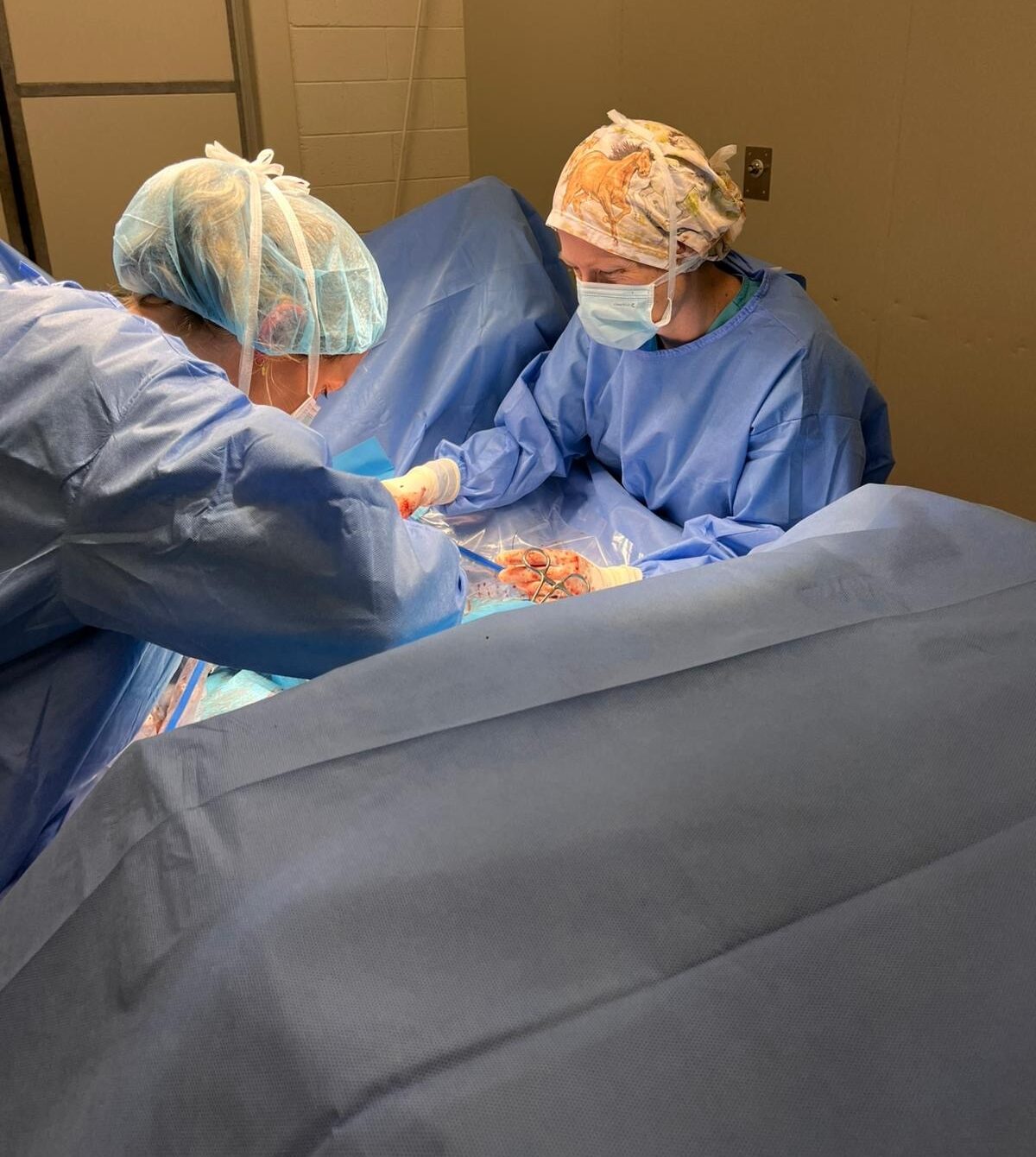
Closed castration is performed at a surgical facility such as Murray Veterinary Services Equine Hospital, where a fully sterile environment can be maintained. This technique involves removal of the testicles through small inguinal incisions, which are closed with absorbable sutures at the end of the procedure.
Risks and complications:
Both minor and major complications are uncommon. Anaesthetic risk remains present but is low.
Post-operative care:
Following surgery, horses are typically confined to a stable or small yard for approximately two weeks to allow the surgical sites to heal properly. Light walking is permitted, but more strenuous exercise should be avoided during this period. Return to normal work is usually possible after around three weeks.
Suitable candidates:
Closed castration is appropriate for most horses and is particularly recommended for:
- Mature horses (>4 years old), where open castration carries increased risk
- Horses that cannot be turned out and exercised after surgery (e.g. those in tendon rehabilitation or recovering from other procedures)
- Horses without two fully descended testicles
This approach is also preferred when testicular position is uncertain or when a more controlled surgical environment is required.